


Sign up for Fiji news, deals & offers
Happiness in your inbox
Sign up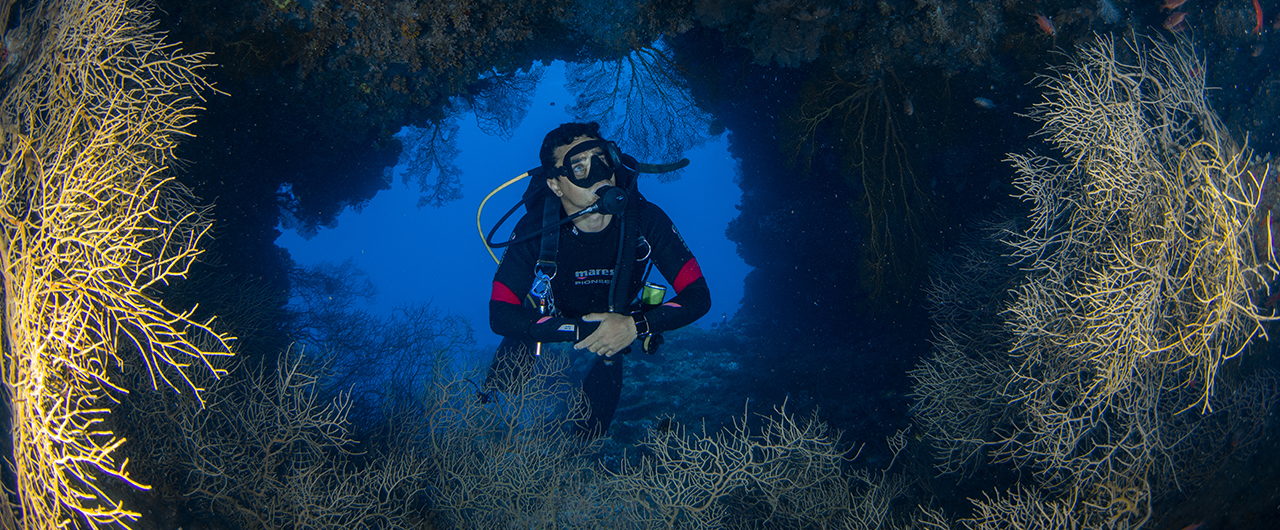

| Marine Life | Best Months |
| Macro Life | Nov – Apr |
| Soft Coral | Apr – Jul |
| Manta Rays | May – Oct |
| Shark Diving | Jun – Sep |
| Pilot Whales | Jun – Sep |
| Humpback Whales | Jul – Oct |
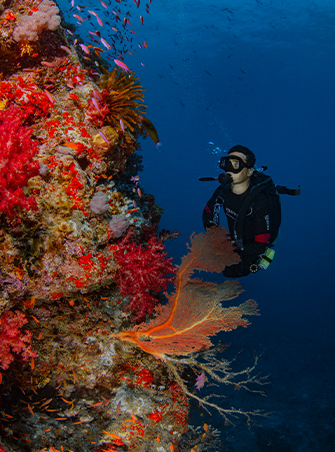
This is when Fiji lives up to its name as the soft coral capital of the world. But soft corals don’t really have a strict season; it’s more about timing your dive with the right current and tide.
Soft corals are found here year-round, especially at hotspot reef sites like the Rainbow Reef, Bligh Waters, Namena Marine Reserve and the Beqa Lagoon. But between April and July, stronger, nutrient-rich currents encourage species like Dendronephthya and leather corals to fully open transforming the reef walls into curtains of flowing colour. Think reds, purples, and whites swaying like an underwater garden in a breeze.
Hit the right tide, and iconic dive sites like the Great White Wall, Purple Wall, and Yellow Mellow absolutely glow. It’s one of the most photogenic Fiji scuba diving experiences, especially for wide-angle underwater photography. Dive with a knowledgeable dive master who understands the local currents and you’ll catch these reefs at their best.
Swimming with gentle manta rays is one of the most magical underwater experiences you can have. But while they can be seen throughout Fiji, sightings become far more reliable between May and October at special spots.
During this period, currents concentrate plankton and draw mantas back to the same feeding and cleaning stations, especially in reef passages and channels like the one off Drawaqa Island in the Yasawa Islands. Other known places where you can snorkel or dive with manta rays include Kadavu, Lomaiviti (Wakaya) and Taveuni (Somosomo Strait). It’s not always guaranteed, but when it happens, it’s unforgettable.
Winter diving in Fiji comes with a bonus when humpback whales pass through Fiji’s waters from their Antarctic feeding grounds between July and October. Fiji is also a protected whale sanctuary and there are no organised swim-with-whale tours here so encounters are completely wild and opportunistic.
You might hear their beautiful whale songs underwater or spot them from the boat between dives, especially around Viti Levu and nearby channels. But it’s not something you can plan for so when it happens enjoy the moment and the magic.
Fiji is one of the world’s top spots for shark diving, and for many divers it’s a bucket list experience.
Sharks are found here year round, so you can plan a scuba diving trip at any time and still have incredible encounters. Rather than an official season, what really changes is the quality of the conditions. From June to September, cooler nutrient rich currents bring in more baitfish and the bigger predators naturally follow. Visibility is usually clearer too, which makes encounters feel more consistent and easier to photograph. This is why it’s often considered the best time for shark diving in Fiji.
In the Beqa Lagoon, encounters are especially reliable, with bull sharks, grey reef sharks, nurse sharks and the occasional tiger shark seen on guided feeding dives by several dive resort operators in Beqa, Pacific Harbour and the Coral Coast. In the Yasawa Islands, the Awakening shark dive offers another consistent shark-feed experience, while near Savusavu, the Dreamhouse dive site gives a more natural chance to see schooling scalloped hammerheads.
Dives are carefully managed, and some operators, including Beqa Adventure Divers and Barefoot Shark Encounters, actively support shark conservation by collecting data on behaviour, identification, and populations. For a full breakdown of the best shark dive operators and sites, see our guide to shark diving in Fiji
Less talked about, but still a special encounter, short-finned pilot whales move through Fiji’s deeper offshore waters, usually in small to medium pods. Sightings are occasional and mostly from boats, particularly during liveaboard trips.
They’re not as predictable as humpbacks, but for divers exploring remote areas, they add a rare pelagic element to the overall Fiji scuba diving experience.
When the water warms up from November to April, the focus shifts from big pelagics and Fiji’s reefs are buzzing with smaller life. Increased plankton supports nudibranchs, shrimps, and juvenile fish, turning reefs into busy, colourful ecosystems. Visibility is slightly lower but still great so this is one of the best times for macro diving in Fiji. Fewer crowds, warm water, and thriving reefs make this a surprisingly rewarding time to dive; especially if you’re not chasing big animals.
Dolphins are one of Fiji’s most magical and often underrated scuba diving experiences. Throughout Fiji, spinner and bottlenose dolphins cruise along reef edges and deeper channels in small pods, appearing unexpectedly to add a playful splash to any dive or boat ride.
Fiji doesn’t have swim-with-dolphin experiences, so every encounter is completely wild and natural. Some areas like Moon Reef off eastern Viti Levu, the Suncoast, Nadi Bay and the Mamanuca Islands sometimes organise boat trips to spot resident dolphins, but sightings are never guaranteed. So when these sleek creatures ride your boat’s bow wave or surface nearby, enjoy every playful splash.
Conclusion
There’s no single best time to scuba dive in Fiji, just different experiences depending on when you go and what you want to see. Match your timing to what you want to see and you’ll find that diving in Fiji is a dream.